 LeaveWise
Leave types describe the kind of absence being recorded. Leave policies group types and allowances so they can be assigned consistently to people. Keeping the distinction clear makes balances easier to explain.
For example, annual leave and sick leave can be different types. A full-time policy can then define the allowances appropriate to a particular group of employees.
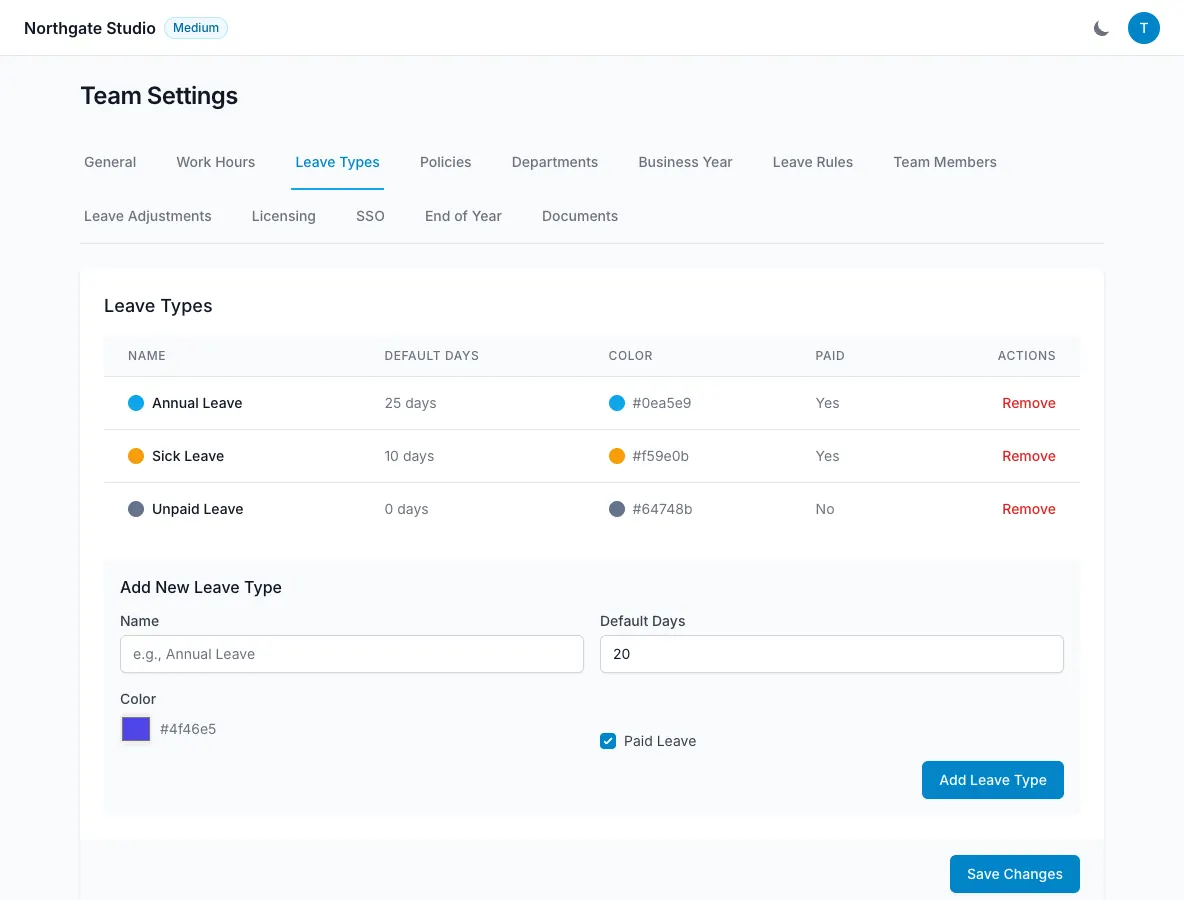
Set up your leave types
A custom leave type has a name, colour, paid or unpaid setting and days. Choose names your team will recognise when they request time off. Keep the distinction between different kinds of absence meaningful for reporting.
Colours help distinguish leave in the calendar and Who’s Out. They are a visual aid, while the name and settings describe what the type represents.
Review paid and unpaid settings carefully. Payroll export separates absence into holiday, sick, unpaid and other categories, so clear source records matter.
Group allowances into policies
A policy bundles leave types with allowances. You might have policies named Full-time, Part-time or Senior, reflecting your organisation’s rules rather than a default assumption about everyone’s contract.
Assign policies per person. Several policies can apply at once. Where policies provide allowances for the same leave type, the highest allowance wins; the values are not simply added together.
This matters when reviewing an unexpectedly high or low balance. Check every policy assigned to the person, not just the one you most recently changed.
Keep working patterns separate
A person’s working pattern tells LeaveWise which days count when they book leave. Pro-rata can also be enabled to calculate a proportional entitlement for part-time patterns or people present for only part of the year.
Do not use a leave type’s name as a substitute for configuring the actual working pattern. The request preview should reflect the days the person works.
Change policies carefully
Reassigning a policy offers a safe remap of existing adjustments. Review that choice so that adjustments remain associated with the intended leave type rather than being overlooked.
After a policy change, inspect the person’s balance breakdown. Entitlement, adjustments and used days should tell a coherent story. Use a reasoned adjustment for an individual exception instead of changing a shared policy to fix one person’s number.